




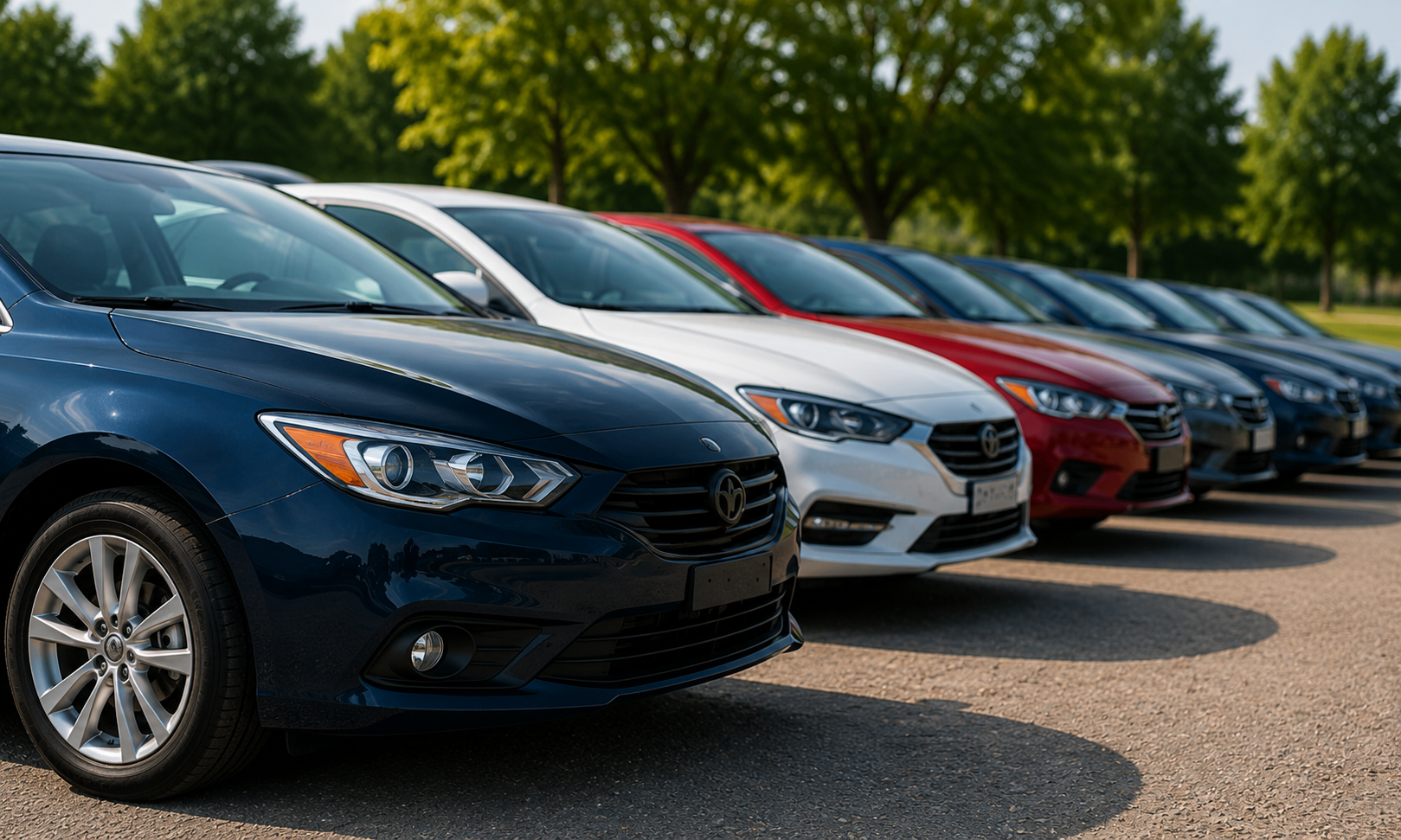
Are Certified Pre-Owned Cars Worth It in 2026?
If you have started looking at used cars in 2026, you may have noticed another phrase appearing alongside the usual make, model, mileage and price: Certified Pre-Owned.
It sounds reassuring. But is it actually worth paying more for a certified used car, or is it simply another way of making an ordinary used car sound more appealing?
The honest answer is that it depends on what is included.
A properly certified or manufacturer-approved used car can offer considerably more reassurance than a standard used vehicle. You may get a more thorough inspection, verified history, preparation work, a warranty and breakdown assistance. But not every certification programme is identical, and the word “certified” on its own should never be enough to make a buying decision.
In 2026, when modern cars contain increasingly complex electronics, driver-assistance systems, automatic transmissions and, in some cases, expensive hybrid or electric technology, the value of additional preparation and protection is worth considering.
What does Certified Pre-Owned actually mean?
There is an important distinction to understand from the start.
In the UK, Certified Pre-Owned is not one universal legal standard that every dealership has to follow. Manufacturers have their own Approved Used programmes, while independent dealers may use their own certification processes.
That means you need to look at what the particular programme actually includes.
A reputable certified vehicle should have gone through a structured inspection and preparation process. This may include checks on the engine, gearbox, brakes, suspension, tyres, electrical systems, bodywork and vehicle history. Depending on the car and programme, additional checks may apply to hybrid batteries or other specialist components.
Manufacturer-backed schemes can also have specific age, mileage and eligibility requirements. Some include a warranty and breakdown cover, while others offer additional benefits such as MOT protection or an exchange period. The details vary considerably between manufacturers.
This is why it is useful to understand what a Certified Pre-Owned car is in the UK before deciding whether certification represents good value.
The label matters less than the process behind it.
Why are Certified Pre-Owned cars more expensive?
The simple reason is that somebody has usually spent more time and money preparing the vehicle.
A standard used car may be inspected before being offered for sale, but a certified programme generally has a defined set of checks and standards that the vehicle must meet.
If a car needs tyres, brakes, servicing or other work before it meets those standards, that work may be carried out before the vehicle is marketed as certified.
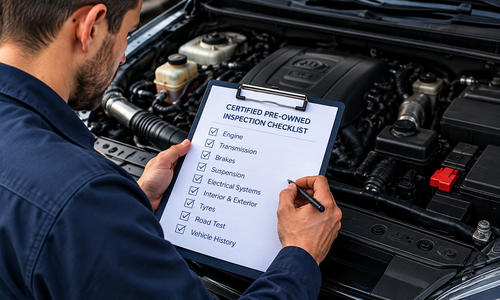
There may also be a warranty included in the price.
All of this costs money, so it is perfectly normal for a certified or manufacturer-approved used car to cost more than an apparently similar vehicle sold without the same package.
The question is not whether you are paying more.
You probably are.
The question is what are you getting for the difference?
That is where buyers need to look beyond the headline price.
Is the extra money actually worth it?
For many buyers, it can be.
Imagine you are comparing two similar cars. One is £12,000 and comes with a documented inspection, warranty and breakdown assistance. Another is £11,000 but comes with less information about its preparation and only limited warranty protection.
The £1,000 saving might look attractive.
But if you subsequently spend several hundred pounds on a service, tyres or repairs, some of that apparent saving can disappear very quickly.
That does not mean the £12,000 certified car is automatically the better deal. The standard used car might be an excellent example that has been maintained exceptionally well.
It simply means you should compare the complete ownership proposition, rather than comparing the advertised prices alone.
This becomes particularly relevant when you are financing a vehicle. A mechanical problem can be frustrating at any time, but unexpected repair bills can be especially unwelcome when you are already making monthly payments.
For some buyers, paying extra for greater predictability is worthwhile.
Certification is not the same as an MOT
This is an important distinction.
An MOT confirms that a vehicle meets the minimum legal requirements for road use at the time of the test. It does not provide a complete assessment of the vehicle's overall condition or future reliability.
A certification inspection should go considerably further.
Depending on the programme, checks can cover mechanical components, electrical systems, tyres, brakes, suspension, bodywork, vehicle history and other areas.
That does not mean certification guarantees that a car will never develop a fault. No inspection can predict every future mechanical problem.
Instead, certification is intended to reduce the risk of buying a vehicle with problems that should have been identified before sale.
The difference is essentially this:
An MOT asks whether the vehicle meets the required roadworthiness standard.
A certification process asks whether the vehicle meets the particular standards required by that certification programme.
Those are not the same thing.
What should a Certified Pre-Owned inspection include?
There is no magic number of checks that automatically makes one programme better than another.
You may see advertisements mentioning 100-point, 120-point or 150-point inspections. A bigger number does not necessarily mean a more comprehensive inspection because different organisations can divide the checks differently.
What matters is what is actually being inspected.
At a minimum, you should want to know that important mechanical and safety areas have been assessed. That could include the brakes, tyres, steering, suspension, engine, transmission and electrical systems.
The vehicle's history should also be checked, including mileage and ownership information where appropriate.
If you are considering a hybrid or electric vehicle, ask specifically what checks have been carried out on the high-voltage system and battery.
This is particularly important because the potential cost of replacing or repairing some modern vehicle components can be substantial.
Do not be afraid to ask for the actual inspection checklist.
A dealership that is confident in its certification process should be able to explain what has been checked and what preparation has been carried out.
Does a warranty make Certified Pre-Owned worthwhile?
A warranty can be one of the biggest attractions of buying a certified vehicle.
However, it is important not to treat the word “warranty” as a guarantee that every possible repair will be free.
Read the terms.
Check how long the warranty lasts, whether there is a mileage limit, what components are covered and whether there is an excess. Pay particular attention to exclusions and any requirements relating to servicing.
A manufacturer's Approved Used warranty may be significantly different from a dealer's own warranty or a third-party warranty.
The length of the warranty is only one part of the equation. The quality and scope of the cover matter too.
A shorter warranty covering major mechanical and electrical components may be more useful than a longer policy containing extensive exclusions.
If you are buying a modern hybrid, EV or automatic car, ask specifically whether the components that concern you most are covered.
Are Approved Used and Certified Pre-Owned the same?
In everyday conversation, the terms are often used to describe a similar idea, but buyers should not assume that every Approved Used or Certified Pre-Owned programme is identical.
“Approved Used” is particularly common among vehicle manufacturers. Each manufacturer sets its own eligibility requirements, inspection process and benefits.
Some schemes include extended warranty protection, breakdown assistance and additional checks. Others may offer exchange policies or MOT-related cover.
The important thing is to read the particular programme's terms rather than assuming that a badge automatically means the same thing everywhere.
The same principle applies to independent dealerships.
An independent dealer can offer a structured certification programme, but the buyer should ask exactly what that means.
How is the vehicle inspected?
Who carries out the inspection?
What happens if the vehicle fails?
What warranty is included?
Is the history independently checked?
What preparation work has been completed?
These questions are much more useful than simply asking whether a car is “certified”.
Is Certified Pre-Owned worth it for a £10,000 car?
This is where things get particularly interesting for budget-conscious buyers.
If you are shopping for a used car around £10,000, you may initially assume that certification is something reserved for more expensive vehicles.
That is not necessarily the case.
At this price point, condition and history can vary significantly between vehicles. You may be comparing cars with different ages, mileages, service histories and previous uses.
That is why additional preparation can be valuable.
Our guide to the best budget cars under £10,000 in the UK explains why buyers should look beyond the purchase price when comparing affordable used cars.
The same principle applies to certification.
If certification costs more but gives you a documented inspection and meaningful warranty protection, it may represent good value.
However, if the price premium is substantial and the additional benefits are limited, you should compare the alternatives carefully.
What about mileage on a Certified Pre-Owned car?
Certification does not make mileage irrelevant.
A certified car can still have relatively high mileage, particularly if it has been used for longer journeys or commuting.
That is not automatically a reason to reject it.
A properly maintained 80,000-mile vehicle can be a better proposition than a neglected 50,000-mile example.
The difference is that certification should give you more information about the vehicle's condition and preparation.
Mileage should still be considered alongside age, servicing, previous use and the model itself.
If you are unsure about mileage at this price point, our guide to what mileage is acceptable on a used car under £10,000 explains why the number on the odometer should always be considered in context.
Are Certified Pre-Owned cars better for hybrids and EVs?
This is arguably one of the strongest arguments for certification in 2026.
Modern electric and hybrid vehicles can be extremely dependable, but they are also technically complex.
There are high-voltage batteries, power electronics, sophisticated software and numerous electronic control systems that were not present in older generations of used cars.
For a buyer who is unfamiliar with these systems, additional inspection and warranty protection can provide genuine reassurance.
If you are considering a used hybrid or EV, ask what specific checks have been carried out.
Has the battery been assessed?
Is the manufacturer's battery warranty still active?
Have diagnostic systems been checked?
Are software updates current?
Does the warranty cover the components you are most concerned about?
The answers matter more than the “Certified Pre-Owned” wording itself.
Who benefits most from buying Certified Pre-Owned?
Certification tends to make the most sense for buyers who value predictability.
Perhaps you are buying a car for commuting and cannot easily manage unexpected downtime. Maybe you are financing the vehicle and want greater confidence about your ownership costs.
You may also simply prefer the reassurance of knowing that the vehicle has been through a structured preparation process.
It can be particularly attractive if you intend to keep the car for several years.
On the other hand, an experienced buyer who is comfortable assessing used cars may be happy purchasing a well-maintained standard used vehicle and putting some of the money saved towards future maintenance.
There is no universally correct answer.
When might Certified Pre-Owned not be worth the premium?
Certification is not automatically good value.
If two cars are mechanically comparable and the certified example costs considerably more without providing meaningful additional warranty or preparation, the price difference may be difficult to justify.
Likewise, do not let a certification badge stop you from checking the car yourself.
You should still inspect the vehicle, check the documentation, ask questions and take a test drive.
Certification reduces risk; it does not eliminate it.
You should also compare the warranty carefully. A warranty with numerous exclusions may not provide as much protection as you initially assumed.
In other words, certification should make you more confident, not less inquisitive.
What should you ask before buying?
Before committing to a Certified Pre-Owned vehicle, ask the dealer to explain exactly what certification means for that particular car.
Find out what inspection has been carried out and whether you can see the checklist. Ask what preparation work was required before the car was certified.
Then look at the warranty.
How long does it last? What does it cover? Is there an excess? Are there mileage restrictions?
Check the vehicle's service history and MOT history as well.
Finally, ask whether there is any manufacturer warranty remaining and whether any recalls or outstanding campaigns apply to the vehicle.
A good dealer should be comfortable answering these questions.
So, are Certified Pre-Owned cars worth it in 2026?
For many buyers, yes — but only when the certification represents genuine additional value.
The appeal is not the words “Certified Pre-Owned” themselves. It is the combination of inspection, preparation, verified information and protection that may come with the programme.
That distinction is important.
A certified car is not automatically a better car than every standard used car. But a well-designed certification programme can make it easier for a buyer to understand what they are purchasing and reduce some of the uncertainty that naturally comes with buying used.
In 2026, that reassurance can be particularly valuable as vehicles become more technologically sophisticated and repair costs can be significant.
If you are comparing two similar cars, don't simply ask which one is cheaper.
Ask what you are getting for the difference.
If the additional inspection, preparation, warranty and support are meaningful, paying a little more for a Certified Pre-Owned car can be money well spent.
For buyers in Peterborough and the surrounding area, the best approach is still the same: compare the individual vehicle, the certification process and the total cost of ownership rather than relying on a label.
Certified Pre-Owned can be worth it in 2026. Just make sure you know exactly what you are paying for.